Introduction
What does it take to win a V60 championship?
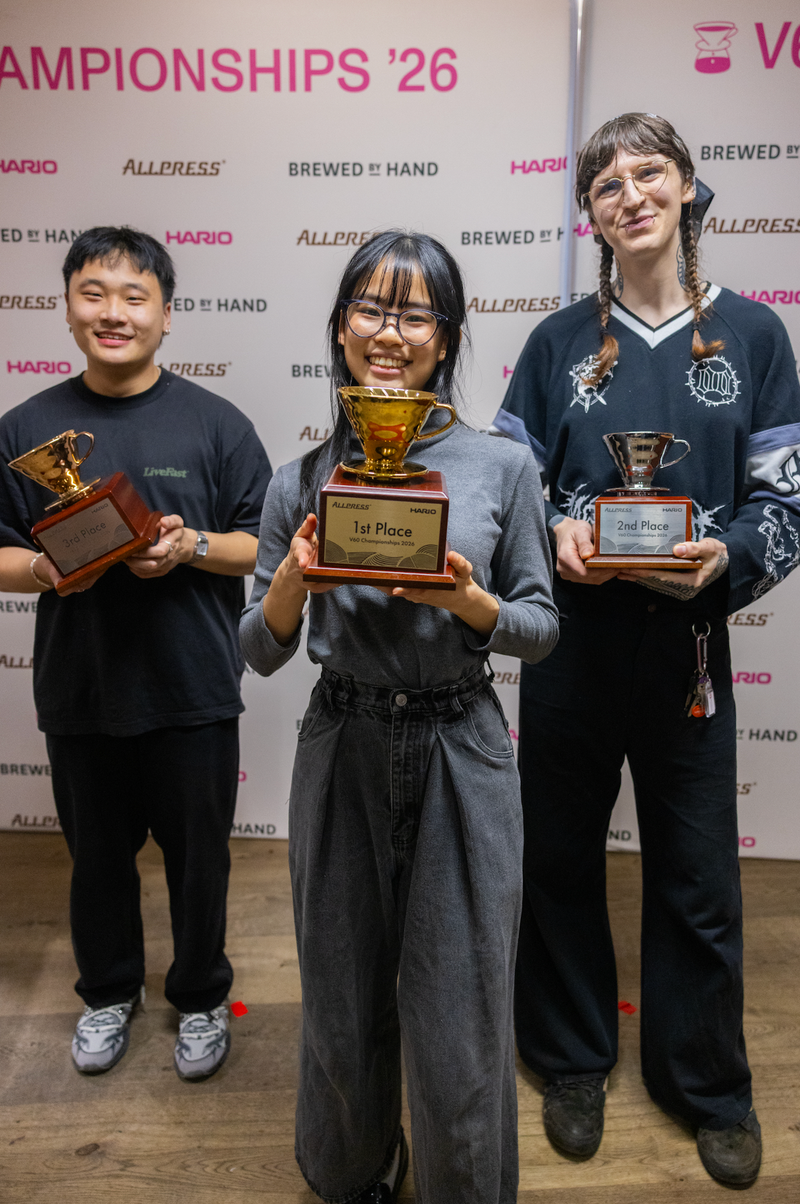
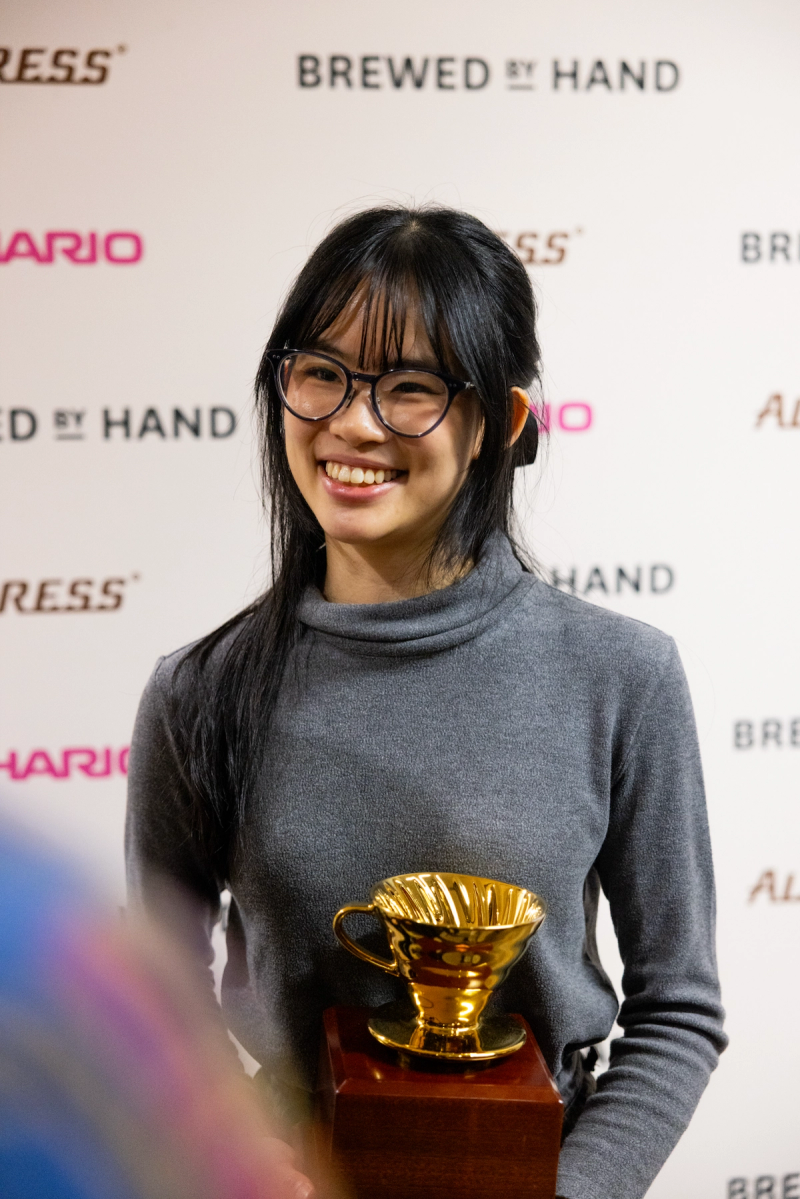
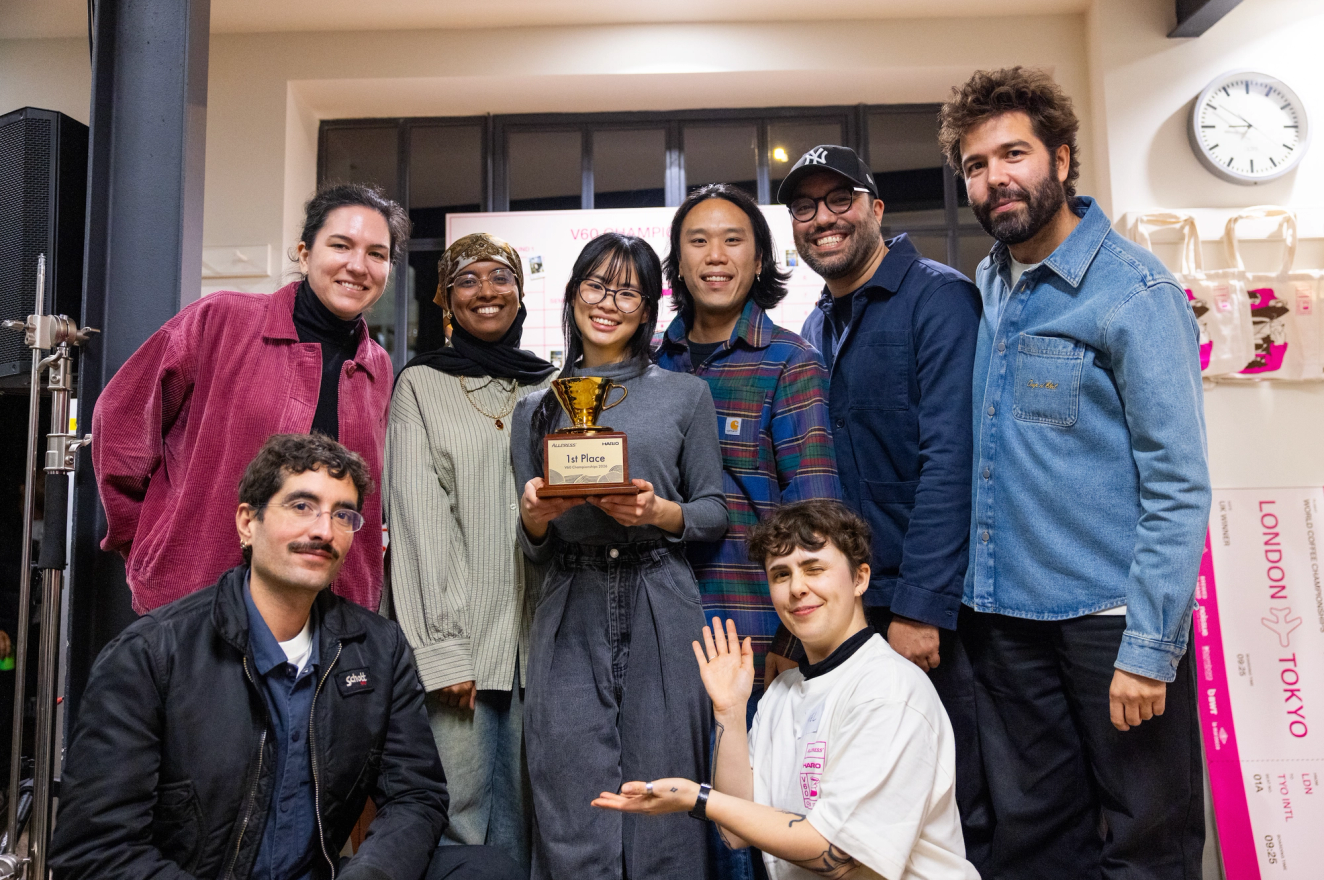
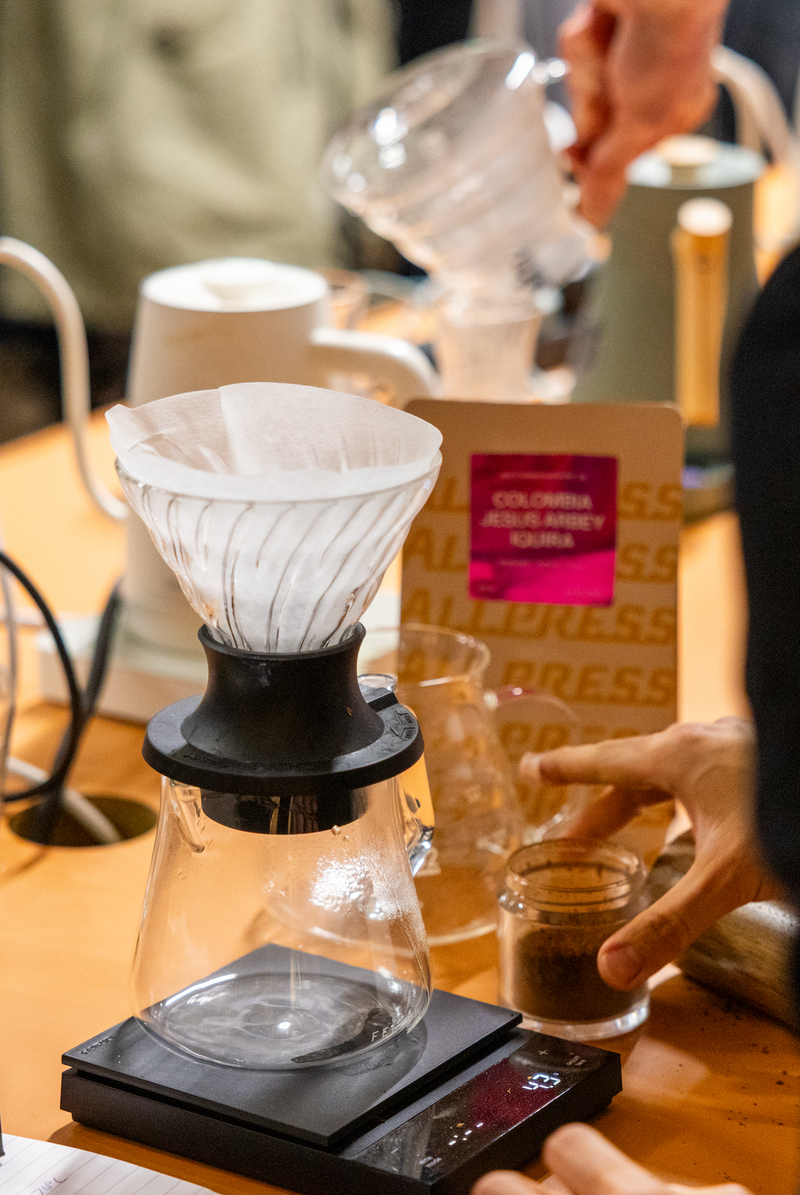
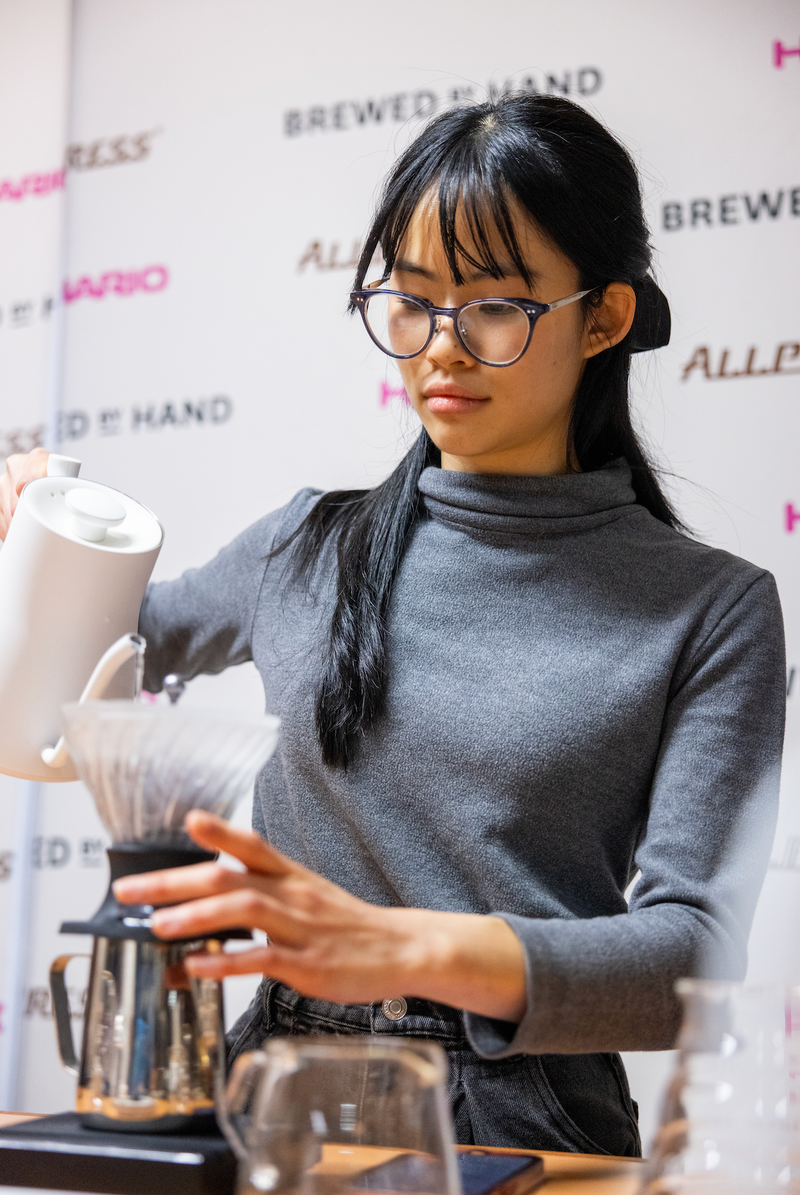
At this year's Allpress x HARIO V60 Championship in the UK, Rachael Kua took first place with a recipe built around one simple idea: a brew that tastes great every time, on stage and off. Using a glass V60 02 on a HARIO Switch base and fast-flowing HARIO Meteor filters, she designed a pour structure that held up across every heat, and adapted it with small, deliberate tweaks as the competition went on.
After the final, Rachael shared her full process, from the priorities behind her recipe to the attempts that didn't make the cut and the small details that made a big difference on the day. Here's how she did it, in her own words.
What were your priorities when designing your recipe?
Rachael: Workflow came first. With just four minutes of prep and five minutes to brew, I needed a big, 300ml-plus brew that would finish in time. That's why I opted for the ultra-fast Meteor papers and built a recipe around them.
After that, it was all about ease of repeatability, and consistently pleasant cups across different coffee types, process levels and freshness, with simple tweaks like grind size and temperature to adjust accordingly.
What were you aiming for in the cup?
Rachael: I prioritised sweetness, clarity, minimising astringency, and quality acidity that survives as the cup cools.
Through experimentation, I settled on a double initial percolation, each pour four times the dose weight, for acidity and clarity. I then finish with an immersion to bring body and reduce my risk of channelling, which can contribute to dryness, bitterness or harshness at the end of the cup.
Which recipes didn't make the final cut?
Rachael: Once I'd decided on HARIO Meteor 02s over tabbed papers, purely for drawdown speed, and chosen my brew ratio, I started designing a recipe around them.
My first attempt was an immersion bloom followed by three percolations. Gosh. The flavours were very muddied and muted, and there was actual visible cloudiness in the carafe. It looked like cloudy apple juice.
The second was three 60g percolations (three times the dose weight) spaced 30 seconds apart, followed by a 140g immersion. It was significantly better, with opening vibrancy and some flavour clarity when hot. But it cooled horribly. The acidity fell completely flat once the cup dropped below 50°C, and it became hollow.
I suspect the pouring intervals were too long given how fast the Meteor filters are, causing the brew bed to lose thermal stability, especially past the bloom phase at around the one to one-and-a-half minute mark.
Rachael's winning V60 recipe
Rachael used nearly the same pour structure across every heat: two percolations, followed by one big immersion at the end.
What you'll need
- Dripper: HARIO V60 Glass 02 + HARIO Switch base
- Filters: HARIO Meteor 02
- Dose: 20g coffee to 310g water (Rachael used 320g in heat one, then tightened the immersion from heat two onwards)
- Grind: 30 clicks on a Comandante C40, coarser than she'd planned, given the heavily processed coffee
Method
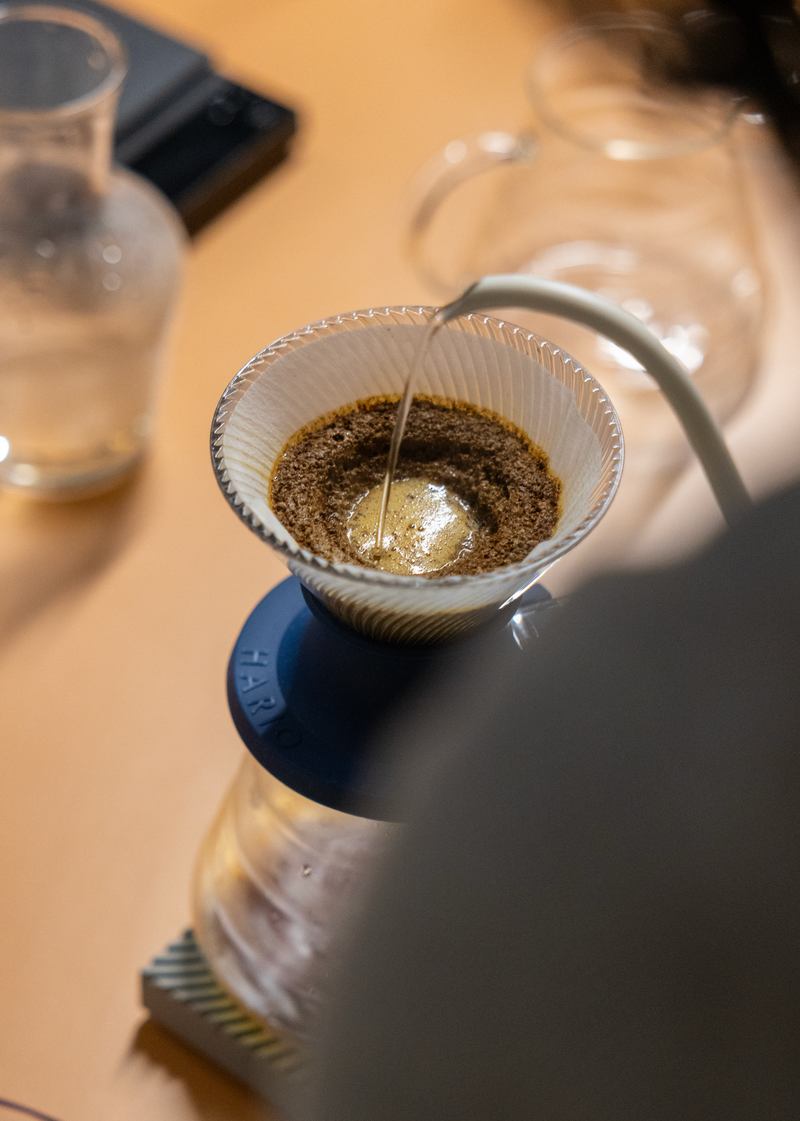
- 0:00–0:45: With the Switch open, pour 80g in a circular motion at 90°C.
- 0:45–1:15: Repeat, pouring another 80g with the Switch open.
- 1:15: Close the Switch and pour to 310g. Rachael used 90°C for this pour in heat two, then dropped to 80°C for the final.
- 2:30: Open the valve.
- Drawdown should finish at 2:45–2:50. Rachael hit this consistently across every attempt.
How did you prepare for competition day?
Rachael: I specifically rehearsed my workflow on top of recipe testing, in particular the 15-minute prep and the five-minute stage presentation.
I also only used equipment I regularly brew with, to reduce uncertainty. I brought my own scales, kettle and bits and bobs like my dosing tray and RDT, and borrowed a grinder I'm familiar with. Special thanks to @salty_duck_ and @liam_coffee for that.
Then there was sorting out defects. To test, I chewed on a normal bean and a partial sour bean, and it was not pleasant. That convinced me to sort out every defect I knew would significantly impact the cup profile: sours, elephant ear beans, and unusually pale and dark beans.
Making sure each recipe is suited to the coffee
Rachael: My competition recipe isn't one-size-fits-all, so here's what I found are its main strengths and trade-offs.
On the plus side, it's repeatable on and off stage, simple to execute, and consistently produces an enjoyable cup. The acidity holds up really well across temperatures, it gives very high sweetness and honeyed brews, and it rounds out many forms of harshness in very fresh coffees, super old coffees and heavily processed coffees alike.
On the other hand, it's not optimised for clarity, so it might not best highlight delicate, high-density coffees. I find the quick drawdown of the Meteors may have sacrificed some of that. The pour structure was also designed with HARIO Meteors in mind, so I'd love to do further testing across more filters.
What can people expect in the cup?
It’s complex, sweet, fruity, and juicy. It ticks a lot of boxes, but the elements can be tricky to balance – which made it a great option for the competition to see which elements each competitor was able to bring out.